AIM designed and produced its first forward bin tipper at the turn of the century. Over the past 26 years that original design has been refined, with improvements to both the design and manufacturing methods ensuring we have the best tipper on the market.
Today, AIM forward bin tippers remain proudly designed and manufactured in Australia, built specifically for the demands of local orchards, packhouses, and industrial operations.
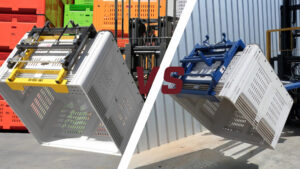
As it is with many successful products, overseas manufacturers, particularly from China, have attempted to replicate the concept and compete on price. While these imported copies may look similar at first glance, they achieve their lower cost by cutting major corners in both design and construction quality.
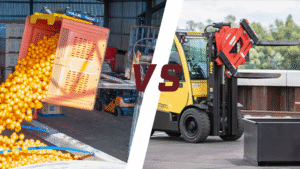
This article outlines the key differences between genuine Australian-made AIM bin tippers and imported copies. Understanding these differences will help you make a more informed purchasing decision based on what’s important to your operations.
This article compares both systems, with a strong focus on practical outcomes seen in real operating environments.
Speed and Tipping Control.
The Chinese units use a 3rd ‘kicker’ ram, that assists the tip in the first part of the tip cycle, whereas the genuine tippers use a cam system.
The cam system is better for 3 Key reasons.
- Adding a 3rd ram creates extra complexity, reliability issues and more potential hydraulic failure points.
- When the tipper tips beyond 90 degrees, the oil that is in this cylinder is sucked from it to the 2 main cylinders leading to an uncontrollable tip (tipper falls forward).
- Because this kicker ram is not attached to the top part of the tipper, the return back to the starting position can be quite slow, as the tipper is not hydraulically pulled down, but rather relies on gravity to close the ram.
Safety features & dropping bins.
AIM bin tippers have a mechanical lock that doesn’t allow the tipper to tip if the bin isn’t properly secured on the forks. Imported tippers do not have this mechanism meaning the potential to drop a bin is far greater.
The front retaining pins on AIM tippers have grooves machined into them to assist with gripping the bins. The copy tippers use a flat piece of metal increasing the chance of a bin slipping out.
Build quality & longevity
These imported units cut costs by relaxing build quality and using poor quality components. AIM tippers use high quality Australian made components are robotically welded to ensure maximum consistency and reliability. As a testament to this some our first units are still in use tipping citrus after 25+ years.
Conclusion
While the initial purchase price of an imported bin tipper may catch your eye, it is worth considering the long-term cost of that decision. Equipment used in harvest and packing operations must perform reliably every day, often under demanding conditions where downtime can quickly disrupt operations.
When comparing options, it is important to look beyond the upfront cost and ask what the true cost might be over time. If a machine fails during a critical part of the harvest, requires constant repairs, or introduces safety risks for operators, the savings made at the time of purchase can quickly disappear.
A tipper that breaks at a critical moment, causes an accident, or needs to be repaired or replaced after only light use can end up costing far more than expected. Reliability, build quality, and safety systems all play a role in protecting both your staff and your productivity.
AIM forward bin tippers are designed and manufactured in Australia with long service life in mind. When choosing equipment for your operation, considering durability, safety, and long-term performance can make all the difference.