Harvest logistics are changing across Australian orchards. Labour availability is tighter, machinery costs continue to rise, and safety expectations are higher than ever.
Because of this, more growers are rethinking how fruit bins are handled during harvest. One piece of equipment seeing strong uptake is the self-loading orchard bin trailer.
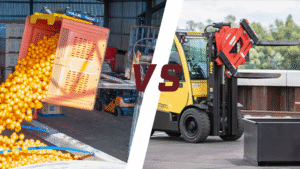
Traditional harvesting methods often rely on tractors towing trailers that pickers load directly onto, or heavy forklift involvement moving bins around orchards and yards. Self-loading trailers change that workflow completely, giving growers more control over timing, labour use, and bin placement.
This article looks at why more farms are investing in self-loading orchard bin trailers and what that means in day-to-day orchard operations.
What Is a Self-Loading Orchard Bin Trailer?
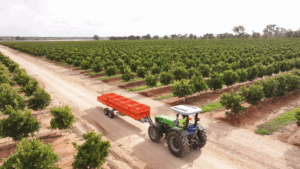
A self-loading orchard bin trailer also known as a bin runner, allows a tractor operator to load, carry, and unload fruit bins without leaving their seat or needing external machinery.
AIM’s bin runners use hydraulically driven tracks to pick bins up from ground level and load them onto the trailer. The same system is then reversed to place empty bins back onto the ground or unload full bins at the shed or loading area.
The real value comes from how much control this gives over where and when bins are placed and collected.
Reducing the Number of Tractors and Skilled Operators Needed
One of the biggest reasons growers are moving toward self-loading trailers is labour and machinery cost.
Traditional harvest setups often involve:
• Pickers filling bins sitting on a tractor trailer
• Multiple tractors working across blocks
• Several skilled operators required to drive the tractors
With a self-loading bin trailer:
• One tractor can place empty bins across multiple rows quickly
• The same tractor can return later to collect full bins
• Picking crews keep working without waiting for bin delivery
Skilled machinery operators are hard to find and expensive to keep. Reducing how many are needed across a harvest season can make a noticeable difference to operating cost.
Additional tractors also mean more capital tied up in equipment, plus ongoing servicing, tyres, fuel, and depreciation.
Safety Benefits Inside the Orchard
Separating machinery movement from picking activity creates a safer working environment.
A typical self-loading workflow looks like this:
- Tractor places empty bins along orchard rows
- Tractor leaves the picking area
- Pickers move through rows filling bins
- Tractor returns later to collect full bins
This keeps heavy machinery away from pickers during active harvesting.
Reducing machine movement near workers lowers the chance of reversing incidents, tight row contact, and general congestion around picking crews.
For many growers, safety improvements alone justify the investment.
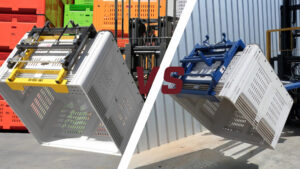
Faster Unloading and Less Forklift Time in Yards and Packhouses
Self-loading trailers allow bins to be placed directly into organised rows in yards, cool rooms, or loading zones.
This creates real efficiency gains:
• Forklifts spend less time repositioning bins
• Stacking becomes faster and more consistent
• Traffic flow improves in busy packhouse areas
Instead of forklifts chasing scattered bins, they can focus on stacking and loading only.
Improving Picker Efficiency and Reducing Physical Strain
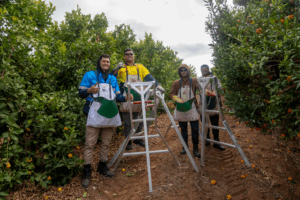
When bins are positioned on the ground close to picking zones, workers spend less time carrying fruit or walking long distances.
This leads to:
• Less lifting and carrying fatigue
• Shorter walking distance to bins
• More consistent picking pace across the day
• Lower risk of strain related injuries
Bins can be positioned only a few steps from where fruit is being picked, which helps crews maintain steady output across long shifts.
Final Word
Self-loading orchard bin trailers are becoming more common because they help solve several major pressures facing growers today.
They reduce reliance on extra machinery and skilled operators, improve safety by separating people from equipment movement, speed up yard handling, and help maintain steady picking output across harvest.
For operations running large picking crews or covering multiple blocks daily, these gains can add up quickly across a full season.
Want to watch them in action? Checkout – https://www.youtube.com/watch?v=rPniiAcnwD8